
Morisset Scrap Metal Collection at a Glance
Call 0411 398 285 or request a collection with your tonnage and site address.
| Town and postcode | Morisset, NSW 2264 |
|---|---|
| Local government area | Lake Macquarie City Council |
| Location | Western Lake Macquarie — approximately 120 km north of Sydney, 35 km south of Newcastle |
| Main access | M1 Pacific Motorway; Morisset station on the Central Coast & Newcastle Line |
| Lead service | Copper recycling (bare bright, #1, #2, insulated, wire, busbar) |
| Also collected | Bulk scrap metal, stainless steel, bulk solar panel recycling |
| Minimum load | 3 tonnes per collection. Under-3t loads collected for a fee |
| Payment | Instant bank transfer once the load is weighed and graded |
| Scheduling | Part of scheduled Hunter and Central Coast runs |
| Areas covered | Morisset, Morisset Park, Dora Creek, Cooranbong, Wyee, Bonnells Bay, Mandalong, Martinsville, Windermere Park, Wangi Wangi, Toronto |
| Phone | 0411 398 285 |
| info@copperrecyclesydney.com.au |
Why western Lake Macquarie produces industrial metal
Morisset looks like a quiet lakeside town, and in most respects it is. But it sits inside one of the more industrially significant pockets of coastal New South Wales, and that is where its bulk metal comes from.
A few kilometres north-east, on the western shore of Lake Macquarie, is Eraring Power Station — Australia’s largest coal-fired power station. Origin Energy and the NSW Government reached an agreement to delay its closure by two years to August 2027, with the possibility of a further extension beyond that. Whatever the final date, two things follow for anyone in the metals business locally. The first is that a station of that scale sustains a substantial contractor base — maintenance providers, mechanical and electrical contractors, fabricators, scaffolders and logistics operators — and that base generates recoverable metal continuously, right now, through ordinary outage and maintenance work. The second is that the eventual retirement and decommissioning of a facility that size represents an exceptional volume of recoverable material over a long period, and the contractors engaged on that work will need somewhere compliant for it to go.
To be clear about what we are and are not claiming: we are a bulk recycler offering collection to contractors and businesses in the area. We are not suggesting any involvement in the station’s decommissioning programme. What we are saying is that western Lake Macquarie has a real industrial contractor economy, and we service it.
Beyond power generation, the district carries the Morisset industrial area, light industrial and trade premises through Dora Creek and Cooranbong, and a notable food manufacturing presence — Sanitarium Health Food Company has long operated at Cooranbong, immediately south-west of Morisset, and food production of that kind runs on stainless steel plant. The former Morisset Hospital site is a large institutional landholding that has been the subject of redevelopment interest. Rural and semi-rural properties through Mandalong, Martinsville and the western lake foreshore add agricultural machinery and fencing volume.
Copper recycling in Morisset
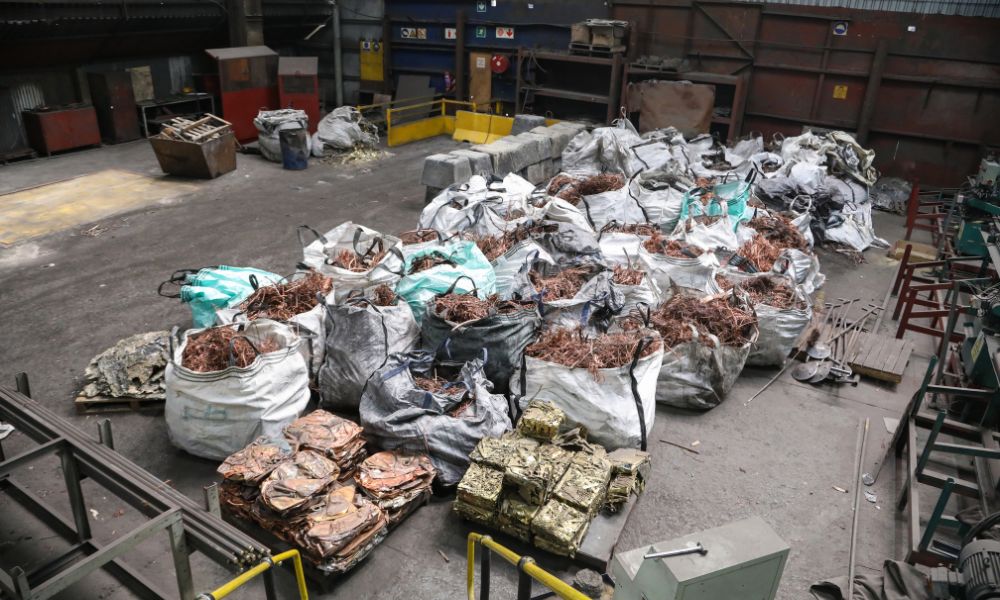
Copper is our lead material. Around Morisset it comes from several directions: industrial electrical contracting across the power generation and maintenance supply chain, switchboard and plant room works, motor rewinds and replacements on industrial and processing plant, cabling from maintenance and upgrade projects, mechanical services and refrigeration work, plumbing across the district’s housing stock, and rural electrical work on pumps, sheds and irrigation.
We handle bare bright, #1 and #2 copper, insulated cable, copper wire in industrial reels and offcuts, pipe and fittings, and busbar from switchboard and distribution work. Grading is done at our facility and itemised on your transaction record, so the settlement figure traces back to what each grade contributed rather than arriving as a single unexplained number.
See our copper scrap and copper wire scrap pages for grading detail.
Bulk scrap metal recycling across western Lake Macquarie
Alongside copper we recycle bulk ferrous and non-ferrous scrap from industrial, commercial, construction and rural sites across the Morisset district. This is a bulk-only service — we do not purchase small lots or individual items, and loads are assessed as a whole.
Typical collections include decommissioned plant and machinery, pumps, motors and conveyor components, structural steel and platework, pipework and valves from maintenance and upgrade projects, stainless steel from food processing and commercial kitchens, racking and shelving from warehouse changes, aluminium sheet and extrusion, brass fittings from plumbing and mechanical work, farm machinery and fencing wire, roofing iron and guttering from demolition and re-roofing, and mixed metal from site clean-outs.
Stainless steel — food processing and commercial plant
Worth noting separately because the district produces more of it than its size suggests. Food manufacturing runs on 304 and 316 stainless: tanks and vessels, pipework and manifolds, conveyors, benching, hoppers, pumps and fittings. Commercial kitchens across the lake’s hospitality venues add more. Stainless grades well and is worth identifying properly rather than letting it go out as mixed ferrous — if you are decommissioning processing plant, tell us what grades you believe you have and we will assess it specifically. Tanks and vessels generally need to be certified empty, clean and degassed before collection.
Solar panel recycling
Bulk solar panel recycling is an additional service for installers, commercial property owners and rural sites across Lake Macquarie and the Hunter. Solar panels are classified as e-waste in NSW rather than standard scrap metal, bringing separate handling, storage and transport obligations, and compliant options are thinner here than in Sydney. We collect at 3 tonnes and above — installer stock turnover, commercial arrays and farm-scale decommissioning. See the solar panel recycling page.

About Morisset and the western lake district
Morisset sits on Awabakal Country at the south-western corner of Lake Macquarie, roughly 120 kilometres north of Sydney and 35 kilometres south of Newcastle. It is the commercial centre for the western lake district, with the M1 Pacific Motorway immediately to the west and Morisset station on the Central Coast & Newcastle Line — a combination that makes it unusually well connected for a town of its size, and the reason it can be serviced as part of a corridor run rather than a dedicated trip.
Lake Macquarie itself is the largest coastal saltwater lagoon in Australia, and the lake’s western shore has a particular character: a string of small lakeside communities — Morisset Park, Bonnells Bay, Windermere Park, Sunshine, Silverwater — interleaved with bushland, rural land and, at Eraring, heavy industry. The contrast is stark and it explains the district’s economy, which mixes retirement and lifestyle residential with power generation, food manufacturing, light industry and agriculture.
Cooranbong, to the south-west, is home to Avondale University and to Sanitarium’s long-established food manufacturing operation. Dora Creek sits between Morisset and the lake edge near Eraring. Wyee lies to the south towards the Central Coast boundary, with Mandalong and Martinsville in the rural hinterland to the west. Toronto and Wangi Wangi sit further north around the lake.
The former Morisset Hospital — a large institutional site established in the early twentieth century on the lake’s edge — remains one of the district’s most significant landholdings and has attracted ongoing redevelopment interest. Institutional sites of that age and scale carry substantial recoverable metal in their building services when works proceed.
For a recycler the practical summary is that Morisset’s volume is contractor-driven rather than production-driven. It arrives when plant is maintained, upgraded or decommissioned, and in quantity when it does — which makes advance notice and project scheduling considerably more useful here than reactive call-outs.
What we collect in Morisset
| Material | Typical Morisset and western Lake Macquarie sources |
|---|---|
| Copper — bare bright, #1, #2, insulated | Industrial electrical contracting, switchboard works, motor rewinds, plumbing strip-outs |
| Copper wire and cable | Industrial reels and offcuts, maintenance and upgrade project cabling |
| Stainless steel — 304 and 316 | Food processing plant, tanks and pipework, commercial kitchens |
| Brass | Plumbing and mechanical fittings, valves, taps |
| Aluminium — extrusion, sheet, cast | Fabrication offcuts, window and door systems, marine and trailer components |
| Air conditioning units | Commercial and industrial mechanical services upgrades |
| Electric motors and pumps | Industrial and processing plant, irrigation, building services |
| Ferrous scrap, platework and structural steel | Plant decommissioning, maintenance projects, demolition, racking removal |
| Farm machinery and fencing wire | Rural properties through Mandalong, Martinsville and the western hinterland |
| Solar panels | Installer stock turnover, commercial and rural array decommissioning |
Catalytic converters, batteries, car engines and electric motors are accepted as part of a qualifying bulk load rather than purchased as individual items.
How to prepare a load for a Morisset collection
Give us an accurate tonnage estimate. Morisset collections travel on a scheduled corridor run, so the vehicle is committed in advance and the estimate determines what we send.
Separate copper grades where practical. Bare bright kept apart from insulated cable and #2 copper grades more favourably than the same metal presented mixed.
Identify stainless grades if you can. On a processing plant decommissioning, knowing what is 304 and what is 316 materially affects the assessment.
Keep contamination out. Timber, plastic, concrete, insulation and general waste reduce assessed weight and complicate loading.
Consolidate to one accessible staging area with truck clearance. On rural properties this matters most — material spread across paddocks and sheds turns a short job into a long one.
Tell us about site requirements and hazards. Industrial sites commonly require inductions, permits or escorted access. Refrigerant-charged units, batteries, residual fluids and vessels needing clearance all need identifying before we attend.
How collection works
Tell us what you have.
Call 0411 398 285 or submit an enquiry with material types, approximate tonnage, the site address and any project timeline.
We assess and schedule.
We confirm the load qualifies at 3 tonnes, check access, vehicle and induction requirements, and slot it into a Hunter or Central Coast run.
We collect.
Our team attends with the appropriate vehicle and lifting equipment, loads the material and leaves the site clear.
Weighing, grading and instant payment.
The load is weighed and graded, you receive an itemised transaction record, and funds are transferred to your account on settlement.
Who we work with around Morisset
- Industrial maintenance and mechanical contractors
- Electrical contractors and switchboard installers
- Fabricators, engineering workshops and sheet metal shops
- Food manufacturing and processing operations
- Demolition, strip-out and decommissioning contractors
- Transport, logistics and warehousing operators on the M1 corridor
- Farmers and rural property managers through the western hinterland
- Builders, roofers and renovation contractors
- Solar installers and decommissioning projects
Areas we cover around Morisset
We collect throughout Morisset, Morisset Park, Dora Creek, Cooranbong, Wyee, Wyee Point, Bonnells Bay, Brightwaters, Windermere Park, Silverwater, Sunshine, Mandalong, Martinsville, Wangi Wangi and Toronto, along with the surrounding areas of western Lake Macquarie.
Morisset sits on the M1 between two of our regular run destinations, which helps scheduling considerably: Newcastle and the Hunter to the north, and Wyong and the Central Coast to the south, with Gosford beyond that and Maitland inland. The full list is on our service areas page.
If your load can be combined with another site on the same corridor, timing usually improves for both — worth mentioning when you call.
Responsible recycling and compliance
Copper Recycle Sydney operates as a registered scrap metal business under the NSW Scrap Metal Industry Act 2016. For anyone selling to us in Morisset that means payment is made by bank transfer rather than cash, we record each transaction along with the seller’s details, and photo identification is required at the point of sale. These obligations apply to every registered dealer in NSW, regional or metropolitan, and exist to keep stolen metal out of the recycling chain.
For industrial and maintenance contractors the documentation side is usually the more relevant consideration. Site operators and principal contractors increasingly require evidence of where recovered material went, and a recorded transaction with an itemised grade breakdown plus an electronic payment trail is generally what those requirements ask for. Instant bank transfer gives you immediate settlement with the paperwork intact — which is a better position than notes in an envelope and no record.
Material collected from western Lake Macquarie is sorted, graded and processed back into manufacturing supply chains. Copper can be recycled indefinitely without loss of performance, and stainless steel recovered from processing plant returns to the stainless steel supply chain rather than being downgraded as mixed scrap — which is a large part of why identifying it properly is worth the effort.
Frequently asked questions — scrap metal recycling in Morisset
Do you collect scrap metal in Morisset NSW?
You’re based in Sydney — how does a Morisset collection work?
What is the minimum load size for a Morisset collection?
What happens if my load is under 3 tonnes?
How do you pay, and how fast?
Do you pay cash for scrap metal?
Do you work with industrial maintenance and decommissioning contractors?
Do you buy individual items, like a single motor or battery?
What types of metal do you collect in Morisset?
Do you handle stainless steel from food processing plant?
Do you collect from farms and rural properties near Morisset?
How long does it take to arrange a Morisset collection?
Do you provide bins for ongoing collection?
What identification or paperwork do I need?
How is the value of my load calculated, and does distance affect it?
Do you collect from Morisset households?
Are you a licensed scrap metal dealer?
Book a scrap metal collection in Morisset
If you have 3 tonnes or more of copper, stainless, scrap metal or solar panels at a Morisset or western Lake Macquarie site, call 0411 398 285 or send us the details. Tell us the material types, rough tonnage, the site address and anything we should know about access or site induction.
Copper Recycle Sydney
South Granville, NSW 2142
Phone: 0411 398 285
Email: info@copperrecyclesydney.com.au
ABN: 82 419 348 954
Office hours: Monday to Saturday, 6am–6pm