Wyong Scrap Metal Collection at a Glance
Call 0411 398 285 or request a collection with your tonnage and site address.
| Town and postcode | Wyong, NSW 2259 |
|---|---|
| Local government area | Central Coast Council |
| Location | Northern Central Coast — approximately 90 km north of Sydney, 60 km south of Newcastle |
| Main access | M1 Pacific Motorway; Wyong station on the Central Coast & Newcastle Line |
| Lead service | Copper recycling (bare bright, #1, #2, insulated, wire, pipe) |
| Also collected | Bulk scrap metal, roofing iron, bulk solar panel recycling |
| Minimum load | 3 tonnes per collection. Under-3t loads collected for a fee |
| Payment | Instant bank transfer once the load is weighed and graded |
| Scheduling | Part of scheduled Central Coast and Hunter runs |
| Areas covered | Wyong, Tuggerah, Kanwal, Watanobbi, Wadalba, Warnervale, Woongarrah, Hamlyn Terrace, Lake Haven, Toukley, Budgewoi, Wyong Creek, Yarramalong, Dooralong |
| Phone | 0411 398 285 |
| info@copperrecyclesydney.com.au |
Where bulk metal comes from on the northern Central Coast
Worth being specific, because the Central Coast is not a heavy industrial region and a page implying otherwise is no use to anyone. It is primarily a residential and service economy with concentrated pockets of employment land. The volume here comes from four places.
Residential construction and the growth corridor. This is the big one. The northern Central Coast has seen sustained residential development through Warnervale, Woongarrah, Hamlyn Terrace, Wadalba and the surrounding release areas, and there has been continuing work to unlock further employment and industrial land around Warnervale. New construction generates metal as a byproduct at every stage — steel framing offcuts, roofing and guttering offcuts, cable offcuts, ducting, reinforcement mesh and bar ends, plumbing offcuts. A builder or framing contractor working steadily across a release area accumulates it fast.
The Wyong–Tuggerah–Warnervale employment spine. Light industrial, warehousing, trade premises and service businesses run along this corridor, anchored commercially by Tuggerah and its business park and retail precinct. These sites produce the conventional industrial stream: racking, plant, fabrication offcuts, motors and fitout steel.
Trades consolidating across the region. Roofers, electricians, plumbers and air conditioning installers working the Central Coast’s ageing residential stock and its new builds rarely reach 3 tonnes from a single job, but accumulate it readily across a week or a month at a yard or depot.
Rural properties and the valleys. The Yarramalong and Dooralong valleys west of Wyong, and the rural land toward Wyong Creek, hold farms and smallholdings with the usual accumulation — superseded machinery, fencing wire, irrigation and stock water pipe, old implements and sheds. Consolidated, these are often the largest single loads in the district.
At the northern end of the local government area, around Mannering Park and the Lake Macquarie boundary, the region also carries power generation infrastructure and its associated maintenance and contractor base — which produces industrial volume of a different kind.
Copper recycling in Wyong
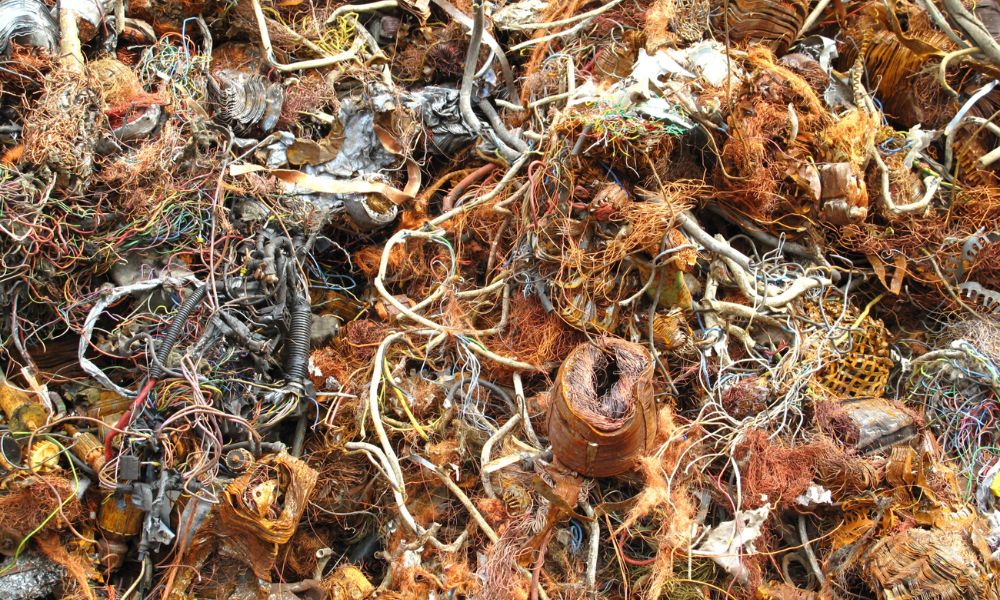
Copper is our lead material. On the Central Coast it comes principally from building services work: copper pipe and fittings from new construction, hot water system replacements and renovation plumbing, cable from new builds and rewires of the older housing stock, switchboard upgrades, and motor windings from air conditioning and pump replacements. Commercial and light industrial sites along the Tuggerah corridor add switchboard and plant room copper. Rural electrical work on pumps, sheds and irrigation contributes across the valleys.
We handle bare bright, #1 and #2 copper, insulated cable, copper wire in reels and offcuts, pipe and fittings, and busbar. Grading is done at our facility and itemised on your transaction record, so the settlement figure traces back to what each grade contributed. For trades accumulating across jobs, keeping bare bright separate from insulated cable and #2 copper is the difference worth an hour of sorting.
See our copper scrap and copper wire scrap pages for grading detail.
Construction site metal — the practical guide
Because new residential construction is the dominant volume source here, it is worth being specific about what is actually worth separating on a build site. Most of it ends up in a mixed waste bin, which is the worst outcome for everyone.
Steel framing offcuts. Light-gauge steel frame and truss offcuts accumulate quickly on a framing crew’s sites and grade as clean ferrous if kept free of timber and plasterboard.
Roofing and guttering offcuts. Colorbond and zincalume sheeting ends, ridge, flashing, fascia and downpipe offcuts.
Reinforcement. Mesh offcuts and bar ends from slab and footing work — heavy, and easy to separate at the point of cutting.
Cable offcuts. Electricians generate these continuously. Keeping a dedicated drum or bag rather than throwing them in the general bin is the single highest-return habit available on site.
Copper and brass plumbing offcuts. Pipe ends, fittings and valve offcuts.
Ducting and mechanical offcuts. Sheet metal ducting ends and bracketry.
Our advice to builders and trade contractors on the Central Coast: run a separate metal bin or bulka bag at your yard, accumulate across sites, and book one qualifying collection. A single house frame will not reach 3 tonnes. A month of a framing crew’s offcuts across several lots usually will — and that is the difference between receiving a payment and paying an under-minimum fee.
Bulk scrap metal recycling across the northern Central Coast
Alongside copper we recycle bulk ferrous and non-ferrous scrap from construction, commercial, light industrial and rural sites. This is a bulk-only service — we do not purchase small lots or individual items, and loads are assessed as a whole.
Typical collections include steel framing and roofing offcuts, reinforcement mesh and bar, structural steel from demolition and rebuilds, racking and shelving from warehouse changes, decommissioned plant, motors and pumps, air conditioning units, hot water systems and appliances from strip-outs, aluminium window and door frames, brass fittings, farm machinery and fencing wire, and mixed metal from site clean-outs.
Solar panel recycling
Bulk solar panel recycling is an additional service for installers, commercial property owners and rural sites. Solar panels are classified as e-waste in NSW rather than standard scrap metal, bringing separate handling, storage and transport obligations, and compliant options are limited on the Central Coast. The region has high residential solar penetration and the earliest installations are now being replaced, which leaves installers holding panel volume. We collect at 3 tonnes and above — installer stock turnover or a commercial array rather than a single household system. See the solar panel recycling page.
About Wyong and the northern Central Coast
Wyong sits on Darkinjung Country on the Wyong River, roughly 90 kilometres north of Sydney and 60 kilometres south of Newcastle. It was the administrative centre of the former Wyong Shire, which amalgamated with Gosford City in 2016 to form Central Coast Council — one of the largest local government areas in New South Wales by population.
The town itself is a service and civic centre, with Wyong Hospital, Wyong station on the Central Coast & Newcastle Line, and the Wyong Race Club. Commercially, the centre of gravity for the northern coast has shifted toward Tuggerah, immediately south, with its retail precinct and business park, and toward the Warnervale corridor to the north, which has carried much of the region’s residential growth and remains the focus of efforts to unlock additional employment and industrial land.
That growth is the defining feature of the district. The release areas through Woongarrah, Hamlyn Terrace, Wadalba and Warnervale have been among the Central Coast’s most active residential development fronts, which means a continuous pipeline of framing, roofing, plumbing and electrical work — and a continuous stream of offcut metal. Older established areas around Toukley, Budgewoi, Lake Haven, Kanwal and Watanobbi contribute the renovation and replacement stream instead: re-roofing, hot water systems, rewires.
West of the M1, the Yarramalong and Dooralong valleys run inland into rural country — dairy, grazing, smallholdings and horse properties, with the usual decades of accumulated machinery and fencing. North toward the Lake Macquarie boundary, Mannering Park and the surrounding area carry power generation infrastructure and its contractor base.
For a recycler, Wyong’s practical advantage is its position. It sits directly on the M1 between Sydney and Newcastle, which means collections here travel on the same corridor runs as Morisset to the north and Gosford to the south — making scheduling considerably easier than for an inland regional town at the same distance.
What we collect in Wyong
| Material | Typical Wyong and northern Central Coast sources |
|---|---|
| Copper — bare bright, #1, #2, insulated | New build and rewire cabling, switchboard upgrades, plumbing offcuts and strip-outs |
| Copper wire and cable | Electrician offcuts from release area construction, industrial reels |
| Copper pipe and fittings | New construction plumbing, hot water system replacement, renovation |
| Brass | Plumbing fittings, valves, taps |
| Steel framing and roofing offcuts | Residential construction across Warnervale, Woongarrah, Hamlyn Terrace, Wadalba |
| Roofing iron and guttering | Re-roofing across established areas, demolition, storm replacement |
| Reinforcement mesh and bar | Slab and footing work on construction sites |
| Aluminium | Window and door frames, cladding, fascia |
| Air conditioning units, motors and pumps | Replacement work, commercial mechanical services, irrigation plant |
| Ferrous and structural steel | Demolition, racking removal, farm machinery, fencing wire, site clean-outs |
| Solar panels | Installer stock turnover, commercial and rural array decommissioning |
Catalytic converters, batteries, car engines and electric motors are accepted as part of a qualifying bulk load rather than purchased as individual items.
How to prepare a load for a Wyong collection
Accumulate to clear the minimum. The key one here. A single house, one re-roof or one rewire will not reach 3 tonnes; a month of a crew’s offcuts consolidated at your yard usually will.
Give us an accurate tonnage estimate. Wyong loads travel on a scheduled corridor run, so the vehicle is committed in advance.
Separate copper grades where practical. Bare bright kept apart from insulated cable and #2 copper grades more favourably than the same metal presented mixed.
Keep metal out of the mixed waste bin. On a construction site this is the whole game. Timber, plasterboard, insulation and packaging mixed through metal reduce assessed weight and complicate the grade.
Consolidate rural loads to one staging point. Material spread across paddocks and sheds turns a short job into a long one. Tell us about gate widths and ground conditions, particularly after rain.
Flag hazards and access limits early. Refrigerant-charged units, batteries, residual fluids, soft ground and narrow access all better known before the truck leaves.
How collection works
Tell us what you have.
Call 0411 398 285 or submit an enquiry with material types, approximate tonnage and the site or depot address.
We assess and schedule.
We confirm the load qualifies at 3 tonnes, check access and vehicle requirements, and slot it into a Central Coast or Hunter run.
We collect.
Our team attends with the appropriate vehicle and lifting equipment, loads the material and leaves the site clear.
Weighing, grading and instant payment.
The load is weighed and graded, you receive an itemised transaction record, and funds are transferred to your account on settlement.
Who we work with around Wyong
- Builders, framing crews and residential construction contractors
- Roofing and guttering contractors
- Electrical contractors and switchboard installers
- Plumbing and hot water system installers
- Air conditioning and mechanical services trades
- Civil and infrastructure contractors
- Demolition and site clearance operators
- Fabricators, workshops and light industrial businesses along the Tuggerah corridor
- Farmers and rural property managers in the Yarramalong and Dooralong valleys
- Solar installers and decommissioning projects
Areas we cover around Wyong
We collect throughout Wyong, Tuggerah, Kanwal, Watanobbi, Wadalba, Warnervale, Woongarrah, Hamlyn Terrace, Lake Haven, Gorokan, Toukley, Budgewoi, Buff Point, Mannering Park, Wyong Creek, Yarramalong, Dooralong and the surrounding northern Central Coast.
Wyong sits on the M1 between two of our regular run destinations, which helps scheduling: Morisset and western Lake Macquarie to the north, continuing to Newcastle, and Gosford and the southern Central Coast to the south. We also cover the broader Central Coast. The full list is on our service areas page.
If your load can be combined with another site on the same corridor, timing usually improves for everyone — worth mentioning when you call.
Responsible recycling and compliance
Copper Recycle Sydney operates as a registered scrap metal business under the NSW Scrap Metal Industry Act 2016. For anyone selling to us in Wyong that means payment is made by bank transfer rather than cash, we record each transaction along with the seller’s details, and photo identification is required at the point of sale. These obligations apply to every registered dealer in NSW, regional or metropolitan, and exist to keep stolen metal out of the recycling chain.
That point has practical weight for builders. Copper theft from construction sites is a persistent problem, and the record-keeping requirement is what separates a legitimate transaction from an untraceable one. For a contractor, the documentation protects you as much as anyone — it evidences where your material went and that it was lawfully sold. If your project carries waste management or resource recovery conditions, the itemised grade breakdown and electronic payment record are generally what those conditions ask for.
Material collected from the Central Coast is sorted, graded and processed back into manufacturing supply chains. Copper can be recycled indefinitely without loss of performance, and steel framing and roofing offcuts recovered from a build return to the steel supply chain rather than going to landfill — which, across a release area under sustained construction, adds up to a substantial quantity of recovered material.
Frequently asked questions — scrap metal recycling in Wyong
Do you collect scrap metal in Wyong NSW?
You’re based in Sydney — how does a Wyong collection work?
What is the minimum load size for a Wyong collection?
What happens if my load is under 3 tonnes?
I’m a builder — what should I separate on site?
How do you pay, and how fast?
Do you pay cash for scrap metal?
Do you buy individual items, like a single hot water system or air conditioner?
What types of metal do you collect in Wyong?
Can you arrange a regular collection for my business?
Do you collect from farms and rural properties in the Yarramalong and Dooralong valleys?
Do you handle demolition and site clearance?
How long does it take to arrange a Wyong collection?
What identification or paperwork do I need?
How is the value of my load calculated, and does distance affect it?
Do you collect from Wyong households?
Are you a licensed scrap metal dealer?
Book a scrap metal collection in Wyong
If you have 3 tonnes or more of copper, scrap metal or solar panels in Wyong or the northern Central Coast, call 0411 398 285 or send us the details. Tell us the material types, rough tonnage and the site or depot address, and we will confirm scheduling and what to expect on settlement.
Copper Recycle Sydney
South Granville, NSW 2142
Phone: 0411 398 285
Email: info@copperrecyclesydney.com.au
ABN: 82 419 348 954
Office hours: Monday to Saturday, 6am–6pm