Springwood scrap metal collection at a glance
| Suburb and postcode | Springwood, NSW 2777 |
| Local government area | Blue Mountains City Council |
| Region | Mid Blue Mountains — about 75 km west of Sydney on the Great Western Highway |
| Lead service | Copper recycling (bare bright, #1, #2, insulated, wire) |
| Also collected | Bulk scrap metal, bulk solar panel recycling |
| Minimum load | 3 tonnes per collection. Under-3t loads collected for a fee |
| Payment method | Electronic funds transfer on qualifying loads |
| Access | Assessed before booking — mountain roads, steep blocks and narrow streets constrain vehicle choice |
| Corridor covered | Glenbrook, Blaxland, Warrimoo, Valley Heights, Springwood, Winmalee, Faulconbridge, Linden, Woodford, Hazelbrook, Lawson |
| Phone | 0411 398 285 |
| info@copperrecyclesydney.com.au |
Being straight about what works in the Blue Mountains
Most scrap metal pages for mountain suburbs are written as though Springwood were an industrial estate. It is not. The Blue Mountains is home to roughly 80,000 people spread across 27 towns and villages along 100 kilometres of mountainous terrain, with a residential and service economy, a World Heritage national park on both sides, and almost no industrial land. Springwood is the mid-mountains service centre — shops along Macquarie Road, a council depot, a library, a leisure centre and a theatre — rather than a manufacturing town.
So the honest answer about who we can help here is narrower than most operators will admit. Bulk loads in Springwood come from builders and renovation contractors, demolition and strip-out jobs, roofing contractors replacing corrugated iron and Colorbond across an ageing housing stock, electrical and plumbing trades who can consolidate several jobs into one collection, and occasionally commercial, council or institutional sites clearing plant or equipment.
There is also a practical reason to talk to us specifically: Springwood sits on the Great Western Highway between Sydney and the Central West, so mountain collections can often be scheduled on the return leg of a Bathurst or Lithgow run. That makes a load here viable that might not justify a dedicated trip.
Copper recycling in Springwood
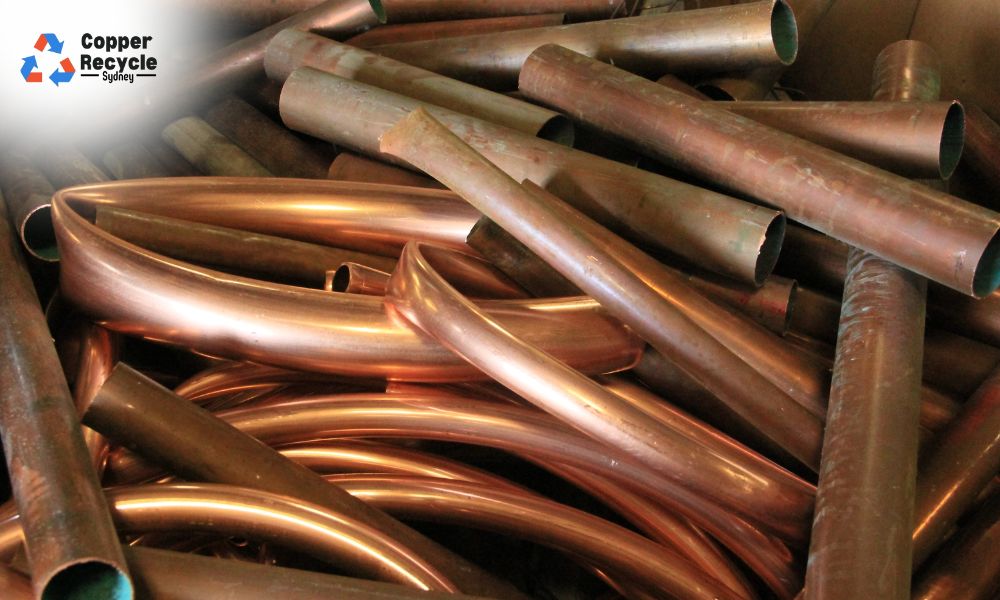
Copper is our lead material. In the mountains it comes almost entirely from building work — copper pipe and fittings stripped out during bathroom and kitchen renovations, cabling from rewires and new builds, hot water system replacements, and switchboard upgrades. The housing stock through Springwood, Faulconbridge and Winmalee includes a lot of mid-century homes now cycling through renovation, which is steady work for local plumbers and electricians and a steady source of copper.
We handle bare bright, #1 and #2 copper, insulated cable, copper wire, pipe and fittings. Grading is done at our facility and itemised on your transaction record.
Bulk scrap metal recycling in the Blue Mountains
Alongside copper we recycle bulk ferrous and non-ferrous scrap from Springwood building, demolition and commercial sites. This is a bulk-only service — we do not purchase small lots or individual items, and loads are assessed as a whole.
Typical mountain collections include roofing iron and Colorbond sheeting from re-roofing work, structural and light-gauge steel from demolition and rebuilds, steel framing offcuts, guttering and downpipes, fencing, hot water systems and appliances from strip-outs, air conditioning units, and mixed metal from site clean-outs. Bushfire-resilient rebuilding in the mountains tends to use more steel than timber, which means rebuild and renovation projects here generate proportionally more recoverable metal than comparable work on the plains.
Solar panel recycling in the Blue Mountains
Bulk solar panel recycling is an additional service for installers and commercial property owners across the mountains. Solar panels are classified as e-waste in NSW rather than standard scrap metal, bringing separate handling, storage and transport obligations. We collect at 3 tonnes and above — which in practice means installer stock turnover or a commercial array rather than a single household system. See the solar panel recycling page.
Access: the thing that actually determines a mountain collection
This deserves its own section, because it is where most mountain jobs go wrong. Blue Mountains blocks are frequently steep, long and narrow. Streets are often single-lane with limited turning space and on-street parking. Many properties sit well below or above road level, with driveways that a loaded truck cannot safely use. Bushfire asset protection zones and vegetation clearance rules affect what can be staged where. Wet weather changes what is trafficable on unsealed access.
None of that makes a collection impossible — it just means we need to know about it first. What we will not do is quote blind and then renegotiate at the gate.
Before we book, tell us:
- Whether the material can be staged at street level or needs to be moved from below or above the road
- Driveway gradient and width, and whether a truck can turn or must reverse
- Street width, parking restrictions and any low branches or overhead constraints
- Ground conditions on any unsealed access, particularly after rain
- Whether you have site plant available to assist with loading
How to prepare a load
- Stage at street level where possible. This is the single biggest factor in whether a mountain collection runs smoothly.
- Give us an honest tonnage estimate. Roofing iron in particular looks like more than it weighs; steel framing weighs more than it looks.
- Separate copper grades where practical. Bare bright kept apart from insulated cable and #2 copper grades more favourably.
- Keep contamination out. Timber, plasterboard and general demolition waste reduce assessed weight — a real issue on renovation sites where everything goes in one pile.
- Flag hazards. Refrigerant-charged units, batteries and residual fluids need identifying before we attend.
How collection works
- Tell us what you have. Call 0411 398 285 or submit an enquiry with material types, tonnage, the Springwood address and access details.
- We assess access and schedule. We confirm the load qualifies at 3 tonnes, work out the right vehicle for the site, and slot it into a Blue Mountains or Great Western Highway corridor run.
- We collect. Our team attends with appropriate equipment, loads the material and leaves the site clear.
- Weighing, grading and settlement. The load is weighed and graded, you receive an itemised transaction record, and payment on qualifying loads is transferred electronically.
Who we work with in the mountains
- Builders and renovation contractors
- Demolition, strip-out and site clearance operators
- Roofing and guttering contractors
- Plumbing and electrical trades consolidating multiple jobs
- Commercial, council and institutional facilities teams
- Solar installers with stock turnover

Blue Mountains areas we cover
We collect along the Great Western Highway corridor through Glenbrook, Blaxland, Warrimoo, Valley Heights, Springwood, Winmalee, Faulconbridge, Linden, Woodford, Hazelbrook and Lawson. Collections here are frequently combined with sites further east in Penrith, St Marys and Mount Druitt, or scheduled on the return leg of a run west to Bathurst. The full list is on our service areas page.
Responsible recycling and compliance
Copper Recycle Sydney operates as a registered scrap metal business under the NSW Scrap Metal Industry Act 2016. For anyone selling to us in Springwood that means payment is made electronically rather than in cash, we record the details of each transaction and the person selling the material, and identification is required at the point of sale.
Material collected from the mountains is sorted, graded and processed back into manufacturing supply chains. Recycling matters everywhere, but there is a particular case for it in a World Heritage-listed landscape: metal removed properly from a mountain site is metal that does not end up dumped down an escarpment or burned on a block, both of which remain genuine problems in the region.
Frequently asked questions — scrap metal recycling in Springwood
Do you collect scrap metal in Springwood?
What is the minimum load size for a Springwood collection?
What happens if my load is under 3 tonnes?
Can you get a truck to my property?
How do you pay for scrap metal in NSW?
Do you buy individual items, like a single hot water system or battery?
What types of metal do you collect in the Blue Mountains?
Do you collect from demolition and rebuild sites?
Why does bushfire rebuilding matter for scrap metal?
How quickly can you collect from Springwood?
Do you provide bins for ongoing collection?
What identification or paperwork do I need?
How is the value of my load calculated?
Are you a licensed scrap metal dealer?
Book a Scrap Metal Collection in Springwood
If you have 3 tonnes or more of metal at a Springwood or Blue Mountains site, call 0411 398 285 or send us the details. Include the material types, rough tonnage, the address, and — importantly here — how a truck would reach the material.
Copper Recycle Sydney
Phone: 0411 398 285
Hours: Monday to Saturday, 6am–6pm
ABN: 82 419 348 954