
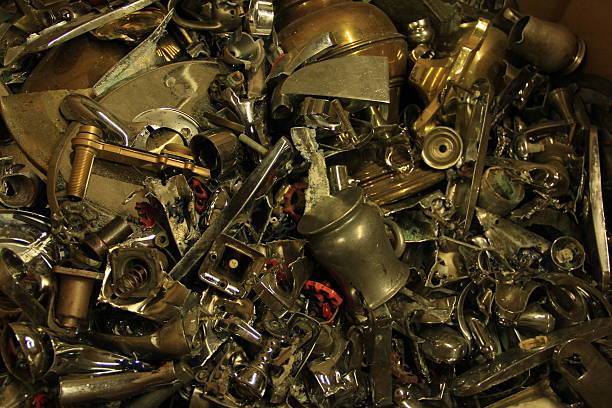
Bathurst scrap metal collection at a glance
| City and postcode | Bathurst, NSW 2795 |
| Local government area | Bathurst Regional Council |
| Region | Central Tablelands / Central West NSW — approximately 200 km west of Sydney |
| Lead service | Copper recycling (bare bright, #1, #2, insulated, wire, busbar) |
| Also collected | Bulk scrap metal, bulk solar panel recycling |
| Minimum load | 3 tonnes per collection. Under-3t loads collected for a fee |
| Payment method | Electronic funds transfer on qualifying loads |
| Scheduling | Planned Central Tablelands runs, not same-day pickup |
| Office hours | Monday to Saturday, 6am–6pm |
| Surrounding coverage | Kelso, Raglan, Eglinton, Perthville, Georges Plains, Rockley, Sofala, Blayney, Oberon, Orange |
| Phone | 0411 398 285 |
| info@copperrecyclesydney.com.au |
How a Sydney recycler services Bathurst
It is worth being direct about this, because most scrap metal websites are not. We are based in South Granville in Sydney. Bathurst is about a two and a half hour drive west over the Blue Mountains on the Great Western Highway. We are not a local yard, and we do not pretend to be one.
What we do instead is run scheduled collections into the Central Tablelands for loads that justify the trip. A 3-tonne minimum and a 200-kilometre haul point in the same direction: this service is built for commercial, industrial and rural volume. A manufacturer clearing production offcuts, a contractor stripping out a plant room, a farm consolidating decades of machinery and fencing wire, an installer decommissioning a solar array — those loads work. A few sheets of roofing iron in a ute tray does not, and we would rather say so on this page than waste your phone call.
The upside of the arrangement is that Bathurst sites get access to Sydney-scale processing and grading, itemised transaction records, and a properly registered dealer, without having to freight material east themselves.
Copper recycling in Bathurst
Copper is our lead material. Bathurst generates it from several directions: electrical contractors working across the Kelso Industrial Estate and the Bathurst town centre, mechanical services and refrigeration trades servicing food processing and manufacturing plant, plumbers working through the city’s older housing stock and the newer Kelso and Llanarth estates, and rural electrical work on pumps, sheds, irrigation and transformers.
We handle bare bright, #1 and #2 copper, insulated cable, copper wire in industrial reels and offcuts, pipe and fittings, and busbar from switchboard work. Grading is done at our facility and itemised on your record, so you can see what each grade contributed rather than receiving a single unexplained figure. See our copper scrap and copper wire scrap pages for grading detail.
Bulk scrap metal recycling for Bathurst businesses and farms
Alongside copper, we recycle bulk ferrous and non-ferrous scrap from Bathurst commercial, industrial and rural sites. This is a bulk-only service — we do not purchase small lots or individual items, and loads are assessed as a whole. Typical Central Tablelands collections include:
- Manufacturing and food processing offcuts
- Decommissioned plant and production equipment
- Stainless steel from processing lines and commercial kitchens
- Structural steel and racking from warehouse fitouts
- Aluminium sheet and extrusion
- Brass fittings from plumbing and mechanical work
- Farm machinery, implements, and fencing wire
- Irrigation pipe, old sheds, silos, and mixed demolition metal
Solar panel recycling across the Central Tablelands
Bulk solar panel recycling is an additional service for installers, commercial property owners and decommissioning projects in the Bathurst region. Solar panels are classified as e-waste in NSW rather than standard scrap metal, which carries separate handling, storage and transport obligations — and regional sites often have fewer compliant disposal options nearby than metropolitan ones do. We collect decommissioned panels at 3 tonnes and above. See the solar panel recycling page, or call to discuss a decommissioning schedule.

About Bathurst and its industrial precincts
Bathurst sits on Wiradjuri Country in the Central Tablelands, roughly 200 kilometres west of Sydney on the Macquarie River. Proclaimed in 1815, it is Australia’s oldest inland European settlement, and it has grown into the commercial and administrative centre of the Central West. The Bathurst region generates around $3.1 billion in gross regional product and draws on a catchment of roughly 135,000 people, with education, food manufacturing, health care, government administration and construction as its main employment sectors.
For a recycler, the relevant geography is the industrial precincts. The Kelso Industrial Estate sits east of the river, accessed directly off the Great Western Highway, zoned IN1 General Industrial and holding a mix of large operations and smaller warehouse facilities — with further industrial land approved east of Hampden Park Road. The Corporation Avenue business park occupies the western extent of the city off the Mitchell Highway, zoned B5 Business Development, with good connections through to Orange. The Bathurst Aerodrome precinct sits north-east of the town centre near the Kelso estate and is being expanded to take on new business operations. Between them, these precincts house the manufacturing, food processing, transport and trade businesses that generate most of the region’s recoverable metal.
Beyond the precincts, Bathurst is surrounded by productive agricultural land, and farms are a consistently underrated source of bulk scrap — superseded machinery, header fronts, old fencing wire, irrigation and stock water pipe, and decommissioned sheds accumulate over decades. The city is also, inevitably, known for Mount Panorama and the Bathurst 1000, and for Charles Sturt University’s Panorama Avenue campus. Kelso is the main growth suburb to the east, with Raglan further along the highway, Eglinton to the north-west and Perthville to the south. Blayney is about 35 kilometres west, Orange about 55, and Lithgow about 65 kilometres back towards Sydney.
What we collect in Bathurst
Catalytic converters, batteries, car engines and electric motors are accepted as part of a qualifying bulk load rather than purchased as individual items.
| Material | Typical Bathurst and Central Tablelands sources |
|---|---|
| Copper — bare bright, #1, #2, insulated | Electrical contractors, switchboard and plant room refits, rural electrical work, plumbing strip-outs |
| Copper wire and cable | Industrial reels and offcuts, data and power cabling from commercial fitouts |
| Brass | Plumbing fittings, valves, taps, mechanical services hardware |
| Stainless steel — 304 and 316 | Food processing lines, commercial kitchens, dairy and fabrication offcuts |
| Aluminium — extrusion, sheet, cast | Manufacturing offcuts, window and door fabrication, transport equipment |
| Air conditioning units | Ducted and split systems from commercial mechanical works |
| Electric motors | Pumps, decommissioned production machinery, farm and irrigation plant |
| Ferrous scrap and structural steel | Farm machinery, fencing wire, silos and sheds, racking removal, demolition |
| Solar panels | Installer stock turnover, commercial and rural array decommissioning |
How to prepare a load for a Bathurst collection
You do not need to sort or clean anything — we assess mixed loads. A few things make a difference, and they matter more on a regional run where the vehicle is committed in advance:
- Give us an honest tonnage estimate. This is the single most useful thing you can do. It determines the vehicle we send and whether the run is scheduled at all.
- Separate copper grades where practical. Bare bright kept apart from insulated cable and #2 copper grades more favourably than the same metal presented mixed.
- Keep contamination out. Timber, plastic, concrete, soil and general waste reduce assessed weight and complicate loading.
- Consolidate before we arrive. On farms especially, material scattered across multiple paddocks and sheds turns a two-hour job into a full day. One accessible staging area with clearance for a truck is ideal.
- Flag hazards and access limits early. Refrigerant-charged units, batteries, residual fluids, soft ground, low bridges, narrow gates — all better known before the truck leaves Sydney.
How collection works
- Tell us what you have. Call 0411 398 285 or submit an enquiry with material types, approximate tonnage and the Bathurst site address.
- We assess and schedule. We confirm whether the load qualifies at 3 tonnes, check access and vehicle requirements, and slot it into a Central Tablelands run. We will give you a realistic window rather than an optimistic one.
- We collect. Our team attends with the appropriate vehicle and lifting equipment, loads the material and leaves the site clear.
- Weighing, grading and settlement. The load is weighed and graded at our facility, you receive an itemised transaction record, and payment on qualifying loads is transferred electronically.
Who we work with in the Bathurst region
- Manufacturers and food processing operations in Kelso and across the city
- Electrical contractors and switchboard installers
- Mechanical services, refrigeration and air conditioning trades
- Plumbing and fabrication businesses
- Farms, graziers and agricultural contractors across the Central Tablelands
- Transport, logistics and warehousing operators
- Demolition, strip-out and site remediation contractors
- Solar installers and decommissioning projects
- Facilities and property managers handling commercial fitouts
Towns and areas we cover around Bathurst
Our Central Tablelands runs cover Bathurst and Kelso, Raglan, Eglinton, Llanarth, Perthville, Georges Plains, Rockley, Sofala, Wattle Flat and the surrounding rural areas of the Bathurst Regional Council LGA, along with Blayney and Oberon. Where volume justifies it, we combine Bathurst collections with runs to Orange, about 55 kilometres west along the Mitchell Highway, and Mudgee to the north. Sites along the Great Western Highway corridor back towards Sydney, including Springwood and Penrith, can often be scheduled on the same return leg. The full list is on our service areas page.
If you have volume in a Central West town not listed here, call anyway — the question is tonnage and access, not the name of the town.

Responsible recycling and compliance
Copper Recycle Sydney operates as a registered scrap metal business under the NSW Scrap Metal Industry Act 2016. For anyone selling to us in Bathurst, that means three things: payment is made electronically rather than in cash, we record the details of each transaction and the person selling the material, and identification is required at the point of sale. These obligations apply to registered dealers anywhere in NSW, regional or metropolitan, and they exist to keep stolen metal out of the recycling chain.
Material collected from the Central Tablelands is sorted, graded and processed back into manufacturing supply chains. Copper can be recycled indefinitely without loss of performance, and recovering it uses a small fraction of the energy needed to produce primary copper from ore. For rural properties in particular, consolidating decades of accumulated steel and machinery into a single recycled load is usually a better outcome than an on-farm scrap pile — for the property and for the material.
Frequently asked questions — scrap metal recycling in Bathurst
Do you collect scrap metal in Bathurst NSW?
You’re based in Sydney — do you actually service Bathurst?
What is the minimum load size for a Bathurst collection?
What happens if my load is under 3 tonnes?
How do you pay for scrap metal in NSW?
Do you buy individual items, like a single battery or catalytic converter?
What types of metal do you collect in Bathurst?
Do you collect from the Kelso Industrial Estate?
Do you collect scrap metal from farms and rural properties near Bathurst?
How long does it take to arrange a Bathurst collection?
Do you provide bins for ongoing collection in Bathurst?
What identification or paperwork do I need?
How is the value of my load calculated, and does distance affect it?
Do you collect from Bathurst households?
Which towns near Bathurst do you cover?
Do you recycle solar panels from Bathurst sites?
Are you a licensed scrap metal dealer?
Book a Scrap Metal Collection in Bathurst
If you have 3 tonnes or more of copper, scrap metal or solar panels at a Bathurst site, call 0411 398 285 or send us the details. Tell us the material types, rough tonnage and the site address, and we will confirm timing and what you can expect on settlement.
Copper Recycle Sydney
Phone: 0411 398 285
Hours: Monday to Saturday, 6am–6pm
ABN: 82 419 348 954