Kiama scrap metal collection at a glance
| Town and postcode | Kiama, NSW 2533 |
| Local government area | Kiama Municipal Council |
| Region | Illawarra / South Coast — about 120 km south of Sydney, 30 km south of Wollongong |
| Lead service | Copper recycling (bare bright, #1, #2, insulated, wire) |
| Also collected | Bulk scrap metal, bulk solar panel recycling |
| Minimum load | 3 tonnes per collection. Under-3t loads collected for a fee |
| Payment method | Electronic funds transfer on qualifying loads |
| Scheduling | Part of scheduled Illawarra and South Coast runs |
| Areas covered | Kiama, Kiama Downs, Kiama Heights, Bombo, Minnamurra, Jamberoo, Gerringong, Gerroa, Werri Beach, Foxground |
| Phone | 0411 398 285 |
| info@copperrecyclesydney.com.au |
What actually produces bulk metal in Kiama
Kiama is a small coastal municipality without a large industrial estate, so it is worth being specific about where 3-tonne loads actually come from here rather than pretending the town is something it is not.
Four sources account for most of it. Dairy and rural properties through the Jamberoo valley and the hinterland accumulate superseded machinery, fencing wire, milking plant, irrigation and stock water pipe, old sheds and implements — often over decades, and often well past 3 tonnes once consolidated. Quarry and civil operations around Bombo and Dunmore run heavy plant that eventually reaches end of life. Construction, renovation and demolition across a municipality with sustained residential development and an ageing housing stock produces structural steel, roofing, copper pipe and cabling. And trades — plumbers, electricians, roofers and mechanical services contractors working across Kiama, Gerringong and Shellharbour — generate copper and brass continuously, particularly where they can consolidate several jobs into one collection.
Copper recycling in Kiama
Copper is our lead material. In Kiama it comes mainly from plumbing and electrical work — pipe and fittings from bathroom and kitchen renovations across the older housing stock, cabling from rewires and new builds, and switchboard work on commercial and rural properties. Dairy sheds and irrigation systems add motor windings and cable, and coastal properties generate a steady flow of replacement work as salt air takes its toll on fittings and fixtures.
We handle bare bright, #1 and #2 copper, insulated cable, copper wire, pipe and fittings, and busbar. Grading is done at our facility and itemised on your transaction record.
Bulk scrap metal recycling for Kiama properties and sites
Alongside copper we recycle bulk ferrous and non-ferrous scrap from Kiama rural, commercial and construction sites. This is a bulk-only service — we do not purchase small lots or individual items, and loads are assessed as a whole.
- Farm machinery and implements, fencing wire
- Dairy and milking plant
- Irrigation and stock water pipe, old sheds and silos
- Structural steel and roofing from demolition and renovation
- Stainless steel from commercial kitchens and food operations
- Brass fittings from plumbing work
- Electric motors and pumps
- Mixed metal from site clean-outs
Solar panel recycling on the South Coast
Bulk solar panel recycling is an additional service for installers, commercial property owners and rural sites across the Kiama and Shoalhaven area. Solar panels are classified as e-waste in NSW rather than standard scrap metal, bringing separate handling, storage and transport obligations — and compliant options are thinner on the South Coast than in Sydney. We collect at 3 tonnes and above. See the solar panel recycling page.
About Kiama and the surrounding municipality
Kiama sits on the South Coast about 120 kilometres south of Sydney and 30 kilometres south of Wollongong, between the Illawarra Escarpment and the sea. The municipality takes in the coastal towns of Kiama, Kiama Downs, Minnamurra, Gerringong and Gerroa, and the rural hinterland around Jamberoo, Foxground and the Jamberoo valley.
Two industries shaped the place, and both still matter for a recycler. The first is dairy: Kiama was central to the early Australian dairy industry, home to the Kiama Pioneer Factory — the first genuinely co-operative butter factory in the country, capitalised entirely by local farmers — and the Jamberoo co-operative operated until the 1990s. Dairy and grazing remain the backbone of the hinterland, which is where most of the district’s bulk ferrous scrap sits today, spread across farms in the form of retired machinery and fencing.
The second is quarrying. Basalt — blue metal — has been quarried around Kiama since the 1870s, and from the 1880s the district was the principal supplier of road and rail ballast to the colony, shipped to Sydney from Kiama Harbour by the “Stone Fleet”. Quarries operated at Pike’s Hill, Brown Street, Bombo Hill, Bombo Headland, Minnamurra, Dunmore and Bass Point; the Bombo Headland quarry is now under a permanent conservation order, and its dramatic basalt columns are one of the district’s landmarks. Boral’s remaining Bombo operation covers around 46 hectares and, together with a NSW Government quarry immediately east, forms a precinct that has produced millions of tonnes of aggregate since 1947.
That precinct is now in transition. In September 2025 the NSW Government declared the Bombo Quarry rehabilitation works a State Significant Development, with Kiama Council identifying the site as a key urban expansion area in its Local Housing Strategy. Rehabilitation and redevelopment of a quarry precinct of that scale means plant decommissioning, structure removal and site clearance — which is exactly the kind of project that produces recoverable metal in genuine volume.
What we collect in Kiama
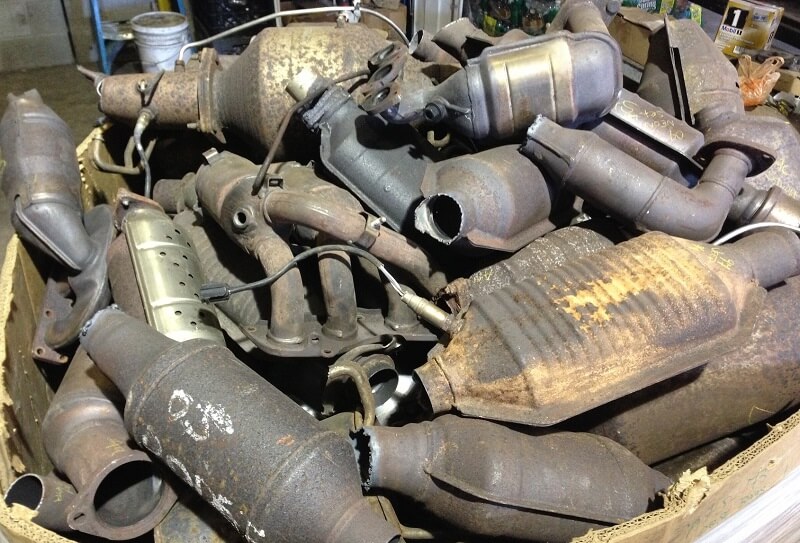
Catalytic converters, batteries, car engines and electric motors are accepted as part of a qualifying bulk load rather than purchased as individual items.
| Material | Typical Kiama sources |
|---|---|
| Copper — bare bright, #1, #2, insulated | Plumbing renovations, rewires, rural and commercial switchboard work |
| Copper wire and cable | Electrical contracting offcuts, dairy shed and irrigation cabling |
| Brass | Plumbing fittings, valves, taps, coastal property fixture replacement |
| Stainless steel — 304 and 316 | Dairy plant, commercial kitchens, food operations, marine fittings |
| Aluminium — extrusion, sheet, cast | Window and door replacement, boat and trailer components |
| Air conditioning units | Split and ducted systems from residential and commercial replacement work |
| Electric motors | Pumps, milking plant, irrigation and quarry machinery |
| Ferrous scrap and structural steel | Farm machinery, fencing wire, sheds and silos, demolition, quarry and civil plant |
| Solar panels | Installer stock turnover, rural and commercial array decommissioning |
How to prepare a load for a Kiama collection
- Consolidate first — this matters most on farms. Material spread across paddocks and multiple sheds turns a short job into a full day. One accessible staging area with truck clearance is ideal.
- Give us an honest tonnage estimate. It determines the vehicle and whether the run gets scheduled.
- Check access before you book. Farm gates, soft ground after rain, steep coastal driveways and narrow hinterland roads all constrain what vehicle we can bring. Tell us what you are working with.
- Separate copper grades where practical. Bare bright kept apart from insulated cable and #2 copper grades more favourably.
- Flag hazards early. Refrigerant-charged units, batteries and residual fluids need identifying before we attend.
How collection works
- Tell us what you have. Call 0411 398 285 or submit an enquiry with material types, approximate tonnage and the Kiama site address.
- We assess and schedule. We confirm the load qualifies at 3 tonnes, check access, and slot it into an Illawarra or South Coast run.
- We collect. Our team attends with the appropriate vehicle and lifting equipment, loads the material and leaves the site clear.
- Weighing, grading and settlement. The load is weighed and graded, you receive an itemised transaction record, and payment on qualifying loads is transferred electronically.
Who we work with around Kiama
- Dairy farmers and graziers through the Jamberoo valley and hinterland
- Agricultural contractors and rural property managers
- Plumbing, electrical and roofing trades
- Builders and renovation contractors
- Demolition and site clearance operators
- Quarry, civil and earthmoving operations
- Solar installers and decommissioning projects
- Commercial and hospitality property owners

Areas we cover around Kiama
We collect across Kiama, Kiama Downs, Kiama Heights, Bombo, Minnamurra, Jamberoo, Foxground, Gerringong, Gerroa and Werri Beach, along with the surrounding rural areas of the Kiama Municipality. Kiama collections are usually scheduled alongside runs to Wollongong and the Illawarra to the north, or Nowra and South Nowra to the south — so if you can coordinate with a neighbour or a nearby site, timing usually improves for both of you. The full list is on our service areas page.
Responsible recycling and compliance
Copper Recycle Sydney operates as a registered scrap metal business under the NSW Scrap Metal Industry Act 2016. For anyone selling to us in Kiama that means payment is made electronically rather than in cash, we record the details of each transaction and the person selling the material, and identification is required at the point of sale. These obligations apply to every registered dealer in NSW and exist to keep stolen metal out of the recycling chain.
Material collected from Kiama is sorted, graded and processed back into manufacturing supply chains. For rural properties in particular, consolidating decades of accumulated steel into a single recycled load is a better outcome than a scrap pile in the back paddock — for the property, for the material, and for what is a genuinely beautiful part of the coast.
Frequently asked questions — scrap metal recycling in Kiama
Do you collect scrap metal in Kiama?
What is the minimum load size for a Kiama collection?
What happens if my load is under 3 tonnes?
Do you collect scrap metal from farms around Kiama and Jamberoo?
How do you pay for scrap metal in NSW?
Do you buy individual items, like a single battery or catalytic converter?
What types of metal do you collect in Kiama?
Can you access rural and coastal properties with a truck?
How long does it take to arrange a Kiama collection?
Do you handle demolition, renovation and site clearance?
Do you provide bins for ongoing collection?
What identification or paperwork do I need?
How is the value of my load calculated?
Do you collect from Kiama households?
Are you a licensed scrap metal dealer?
Book a Scrap Metal Collection in Kiama
If you have 3 tonnes or more of copper, scrap metal or solar panels at a Kiama, Jamberoo or Gerringong site, call 0411 398 285 or send us the details. Tell us the material types, rough tonnage, the site address and anything we should know about access.
Copper Recycle Sydney
Phone: 0411 398 285
Hours: Monday to Saturday, 6am–6pm
ABN: 82 419 348 954