Western Sydney Scrap Metal Collection at a Glance
| Our base | South Granville, NSW 2142 — within Western Sydney |
| Region covered | Greater Western Sydney, from Parramatta to the Blue Mountains foothills |
| Lead service | Copper recycling (bare bright, #1, #2, insulated, wire, busbar) |
| Also collected | Bulk scrap metal, bulk solar panel recycling |
| Minimum load | 3 tonnes per collection. Under-3t loads collected for a fee |
| Payment | Instant bank transfer once the load is weighed and graded |
| Collection hours | Monday to Saturday, 6am–6pm |
| Major precincts served | Wetherill Park, Smithfield, Eastern Creek, Erskine Park, Kemps Creek, Silverwater, Moorebank, Seven Hills, Girraween, Mulgrave |
| Phone | 0411 398 285 |
| info@copperrecyclesydney.com.au |
Why Being Based in Western Sydney Matters
Plenty of operators advertise Western Sydney collection. Most of them drive out from somewhere else. Our facility is in South Granville, which sits between Parramatta and Bankstown in the middle of the region, and that has three practical consequences for anyone with a load here.
Scheduling is short, not batched. We do not need to accumulate enough Western Sydney work to justify a run, because we are already here. Most collections in the region can be booked within a day or two rather than folded into a weekly route.
Transport does not eat into your return. On a regional collection, distance is a real cost and it shows up somewhere in the numbers. Inside Western Sydney the haul is short, which is one of the reasons the region’s loads are the most straightforward we handle.
We know the sites. Loading dock constraints at Wetherill Park, the induction requirements on the larger Eastern Creek distribution facilities, which Erskine Park streets a semi can actually turn in — that is accumulated local knowledge rather than something worked out on arrival.

Copper Recycling Across Western Sydney
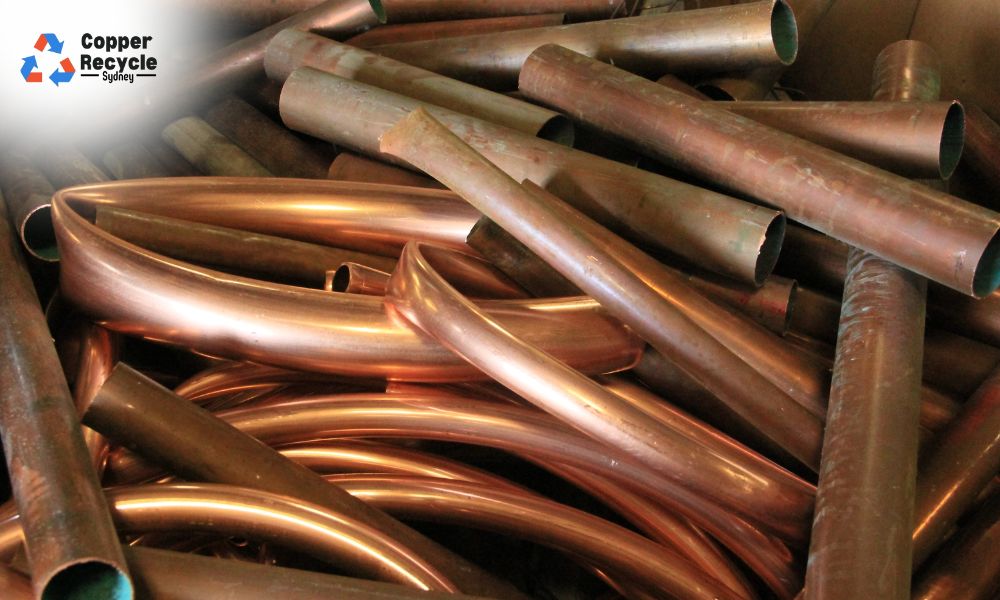
Copper is our lead material and Western Sydney generates more of it than anywhere else in the state. The region carries the bulk of Sydney’s manufacturing, warehousing, fabrication and distribution activity, and all of it runs on copper: switchboards, motor windings, busbar, power and control cabling, transformer work, hydraulic and mechanical services.
Three sources dominate: industrial electrical contracting producing bare bright and insulated cable in volume, warehouse and factory fitouts stripping out cabling and plant, and mechanical services and refrigeration in large distribution facility plant rooms. We handle bare bright, #1 and #2 copper, insulated cable, copper wire in industrial reels and offcuts, pipe and fittings, and busbar, graded at our facility and itemised on your transaction record. See our copper scrap and copper wire scrap pages for grading detail.
Bulk Scrap Metal Recycling for Western Sydney Industry
Alongside copper we recycle bulk ferrous and non-ferrous scrap from commercial and industrial sites across the region. This is a bulk-only service — we do not purchase small lots or individual items, and loads are assessed as a whole rather than piece by piece.
Typical Western Sydney collections include factory offcuts and production waste, decommissioned plant and machinery, warehouse racking and structural steel from fitouts and relocations, stainless steel from food processing and fabrication, aluminium extrusion and sheet from window, door and facade manufacturers, brass fittings and valves from plumbing and mechanical work, electric motors and pumps, and mixed metal from demolition and site clean-outs.
Solar Panel Recycling
Bulk solar panel recycling is an additional service for installers, commercial property owners and decommissioning projects across the region. Solar panels are classified as e-waste in NSW rather than standard scrap metal, which brings distinct handling, storage and transport obligations. Western Sydney’s warehouse roofs carry an enormous amount of commercial solar, and the earliest of those arrays are now reaching end of life. We collect at 3 tonnes and above. See the solar panel recycling page.
Western Sydney’s Industrial Geography — and Why It Is Changing Fast
Western Sydney has always been where the state’s industry sits. What is different now is the scale of what is being added to it.
Western Sydney International (Nancy-Bird Walton) Airport at Badgerys Creek began commercial cargo flights on 26 July 2026, with passenger operations scheduled to begin on 25 October 2026 [web:1]. It sits roughly 44 kilometres west of the Sydney CBD and, unlike Sydney Airport, operates 24 hours with no curfew. The M12 Motorway is complete, materially improving connectivity between the airport and the broader freight network.
The industrial consequence is substantial. The airport sits at the centre of Sydney’s Outer Central West industrial region — Badgerys Creek, Kemps Creek, Erskine Park, Eastern Creek, Orchard Hills and Bringelly — and CommBank estimates roughly 5.5 million square metres of potential new industrial floorspace across some 205 proposed projects there, enough to increase existing industrial stock in the region by around 55 per cent, at an estimated development value near $24 billion [web:2]. That is the largest industrial development pipeline of the 17 Australian regions CommBank monitors. Around 94 per cent of the proposed projects are distribution warehouses or logistics facilities, and the pipeline includes eight cold storage facilities — a direct consequence of the airport’s curfew-free status and its role in handling fresh and refrigerated freight.
The wider Western Sydney Aerotropolis spans about 11,200 hectares across the Penrith and Liverpool local government areas, with more than $26 billion in private development applications lodged and future employment estimates running from 120,000 to 200,000 jobs. Bradfield City Centre is planned as its commercial heart. In the Mamre Road Precinct at Kemps Creek, Sydney Water is delivering a $644 million regional stormwater scheme unlocking around 1,020 hectares of industrial land for warehouse and freight development through to 2030. Aldi’s $1 billion distribution centre was the first major approval inside the Aerotropolis.
Alongside all of that, the established precincts keep working: Wetherill Park and Smithfield as one of the densest industrial areas in Australia, Silverwater and Girraween closer in, Seven Hills and Blacktown to the north-west, Moorebank and its intermodal terminal to the south, and the Eastern Creek and Erskine Park distribution corridor in between.
For a recycler, the point is simple. Construction generates offcut metal. Fitouts generate strip-out metal. Tenancy churn generates racking and cabling. A region adding 5.5 million square metres of warehouse space while its existing estates keep cycling tenants is a region producing recoverable metal continuously, for years.
What We Collect in Western Sydney
| Material | Typical Western Sydney sources |
|---|---|
| Copper — bare bright, #1, #2, insulated | Switchboard refits, cable pulls, warehouse fitouts, plumbing strip-outs |
| Copper wire and cable | Industrial reels and offcuts, data and power cabling, comms infrastructure |
| Brass | Plumbing fittings, valves, taps, mechanical services hardware |
| Stainless steel — 304 and 316 | Food processing plant, fabrication offcuts, commercial kitchen strip-outs |
| Aluminium — extrusion, sheet, cast | Window, door and facade fabrication, manufacturing offcuts, transport equipment |
| Air conditioning units | Ducted and split systems from warehouse and commercial mechanical works |
| Electric motors | Pumps, conveyors, decommissioned production machinery |
| Ferrous scrap and structural steel | Racking removal, plant decommissioning, demolition, construction offcuts |
| Solar panels | Commercial rooftop array decommissioning, installer stock turnover |
Catalytic converters, batteries, lead, car engines and electric motors are accepted within a qualifying bulk load rather than purchased as individual items.
Suburbs and Precincts We Cover
We collect across Greater Western Sydney. Areas with their own pages include Parramatta, Blacktown, Penrith, Liverpool, Wetherill Park, Smithfield, Silverwater, Moorebank, St Marys, Mount Druitt, Guildford, Girraween, Riverstone, Mulgrave, Castle Hill and Baulkham Hills.
We also collect throughout Eastern Creek, Erskine Park, Kemps Creek, Badgerys Creek, Bringelly, Orchard Hills, Huntingwood, Arndell Park, Seven Hills, Prestons, Ingleburn, Chullora, Villawood, Yennora, Fairfield, Auburn, Rydalmere and the rest of the region. The full list is on our service areas page.
How to Prepare a Load
- Separate copper grades where practical. Bare bright kept apart from insulated cable and #2 copper grades more favourably than the same metal presented mixed.
- Keep non-metal contamination out. Timber, plastic, concrete and general waste reduce assessed weight and slow the collection.
- Consolidate to one accessible area. Loading dock, hardstand or roller door apron with truck clearance.
- Tell us about site induction requirements. Larger distribution facilities across Eastern Creek and Erskine Park commonly require inductions, permits or escorted access.
- Flag hazards early. Refrigerant-charged units, batteries and residual fluids need identifying before we attend.
How Collection Works
Tell us what you have
Call 0411 398 285 or submit an enquiry with material types, approximate tonnage and the site address.
We confirm the collection
Access, vehicle requirements, induction needs and timing, plus whether the load clears 3 tonnes.
We collect
Our team attends with the appropriate vehicle and lifting equipment, loads the material and leaves the site clear.
Weighing, grading and instant payment
The load is weighed and graded, you receive an itemised transaction record, and funds are transferred to your account on settlement.
Who We Work With Across the Region
- Industrial electrical contractors and switchboard installers
- Mechanical services, refrigeration and air conditioning trades
- Manufacturers, fabricators and engineering workshops
- Transport, logistics and warehousing operators
- Commercial fitout and strip-out contractors
- Demolition and site remediation contractors
- Construction companies working across the Aerotropolis and airport precincts
- Solar installers and decommissioning projects
- Facilities and property managers with multi-site portfolios
Responsible Recycling and Compliance
Copper Recycle Sydney operates as a registered scrap metal business under the NSW Scrap Metal Industry Act 2016. For anyone selling to us in Western Sydney that means payment is made by bank transfer rather than cash, we record each transaction along with the seller’s details, and photo identification is required at the point of sale. These obligations apply to every registered dealer in NSW and exist to keep stolen metal out of the recycling chain — a live concern across a region carrying this much cable, infrastructure and construction site material.
Instant payment and compliance are not in tension. Funds move on settlement the moment your load is weighed and graded; what you get in addition is a record of the transaction at both ends, which matters if your business has its own reporting or audit obligations.
Material collected across Western Sydney is sorted, graded and processed back into manufacturing supply chains. Copper can be recycled indefinitely without loss of performance and recovering it uses a fraction of the energy needed to produce primary copper from ore — which means cable offcuts from a warehouse fitout have genuine downstream value rather than being landfill diverted for appearance’s sake.
Frequently Asked Questions — Scrap Metal Recycling in Western Sydney
Do you collect scrap metal across Western Sydney?
How do you pay, and how fast?
Do you pay cash for scrap metal?
What is the minimum load size?
What happens if my load is under 3 tonnes?
Do you buy individual items, like a single battery or catalytic converter?
What types of metal do you collect?
Do you collect from Wetherill Park, Eastern Creek and Erskine Park?
Can you service construction sites in the Aerotropolis and around the new airport?
How quickly can you collect in Western Sydney?
Do you provide bins for ongoing collection?
Can you handle multiple sites under one arrangement?
What identification or paperwork do I need?
How is the value of my load calculated?
Do you collect from Western Sydney households?
Do you recycle solar panels from Western Sydney sites?
Are you a licensed scrap metal dealer?
Book a Western Sydney Scrap Metal Collection
If you have 3 tonnes or more of copper, scrap metal or solar panels anywhere in Western Sydney, call 0411 398 285 or email info@copperrecyclesydney.com.au. Tell us the material types, rough tonnage and the site address, and we will confirm timing and what to expect on settlement.
Copper Recycle Sydney
South Granville, NSW 2142
Phone: 0411 398 285
Email: info@copperrecyclesydney.com.au
Hours: Monday – Saturday, 6am – 6pm
ABN: 82 419 348 954